You know that moment.
The one where your chest feels tight. Or your arm goes numb. Or you get suddenly dizzy and can't catch your breath.
For a split second, everything stops. Your brain runs through all the possibilities. The worst one hangs there, unspoken, but you both know what you're thinking.
Then it passes. You feel fine again. And you tell yourself it was nothing. Indigestion. Stress. You're just getting older.
And you move on with your life.
But here's what I need you to understand: that moment is a gift. It's your body waving a flag, trying to get your attention. If you ignore it, you might not get another chance.
Heart disease doesn't always announce itself with dramatic symptoms. Silent ischemia—reduced blood flow to the heart with no obvious symptoms—affects millions of people. Silent heart attacks can occur without any noticeable signs, yet they can cause lasting heart damage.
The scariest part? You might have a heart attack and never even know it.
But you don't have to wait for a scare to become your wake-up call.
The best time to care about your circulation was years ago. The second-best time is today.
You can protect your heart. You can improve your energy. You can prevent complications and protect what matters most.
Protect. Support your heart and your life with proactive daily habits.
Improve. Boost your energy and secure your future with smarter choices.
Prevent. Stop complications before they start. Protect your family, your independence, your tomorrows.
A study from Harvard Health found that the optimal blend of heart-healthy habits includes eight to nine hours of sleep per night, 42 minutes or more of moderate-to-vigorous exercise daily, and a modest diet quality score. And the CDC recommends at least 150 minutes of moderate-intensity exercise per week for adults.
These aren't impossible goals. They're achievable. And they can save your life.
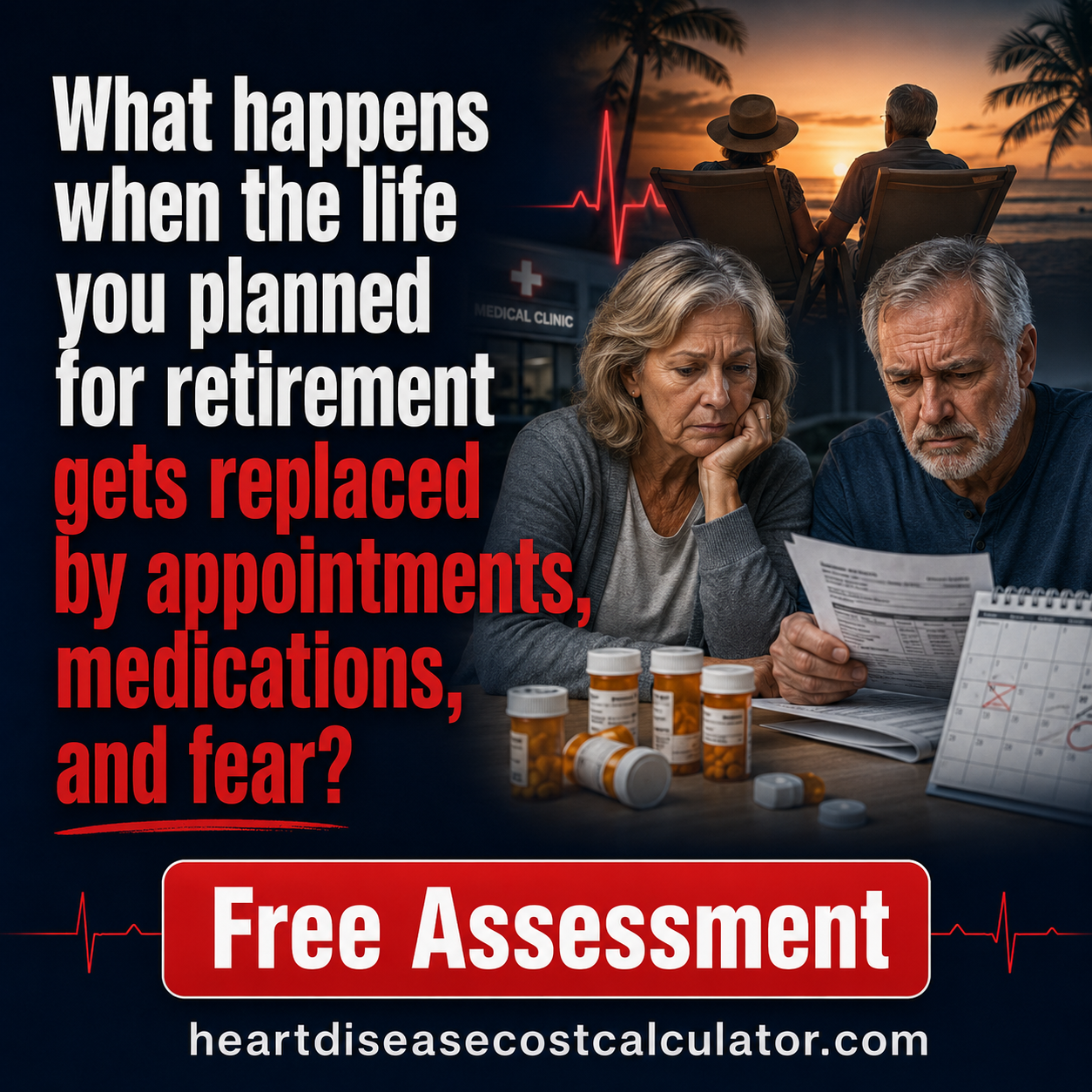
Take the free assessment. Understand your risk. Build your plan. Don't let a health scare be the thing that finally gets your attention.
The best time was years ago. The second-best time is today.
About the Author
Katherine Reynolds
RN, MSN
Medical Writer & Health Finance Specialist
Katherine Reynolds specializes in making complex medical and financial information accessible to patients and families. With expertise in cardiovascular health and healthcare economics, Katherine Reynolds helps readers understand the true costs of heart disease and make informed decisions about their care.