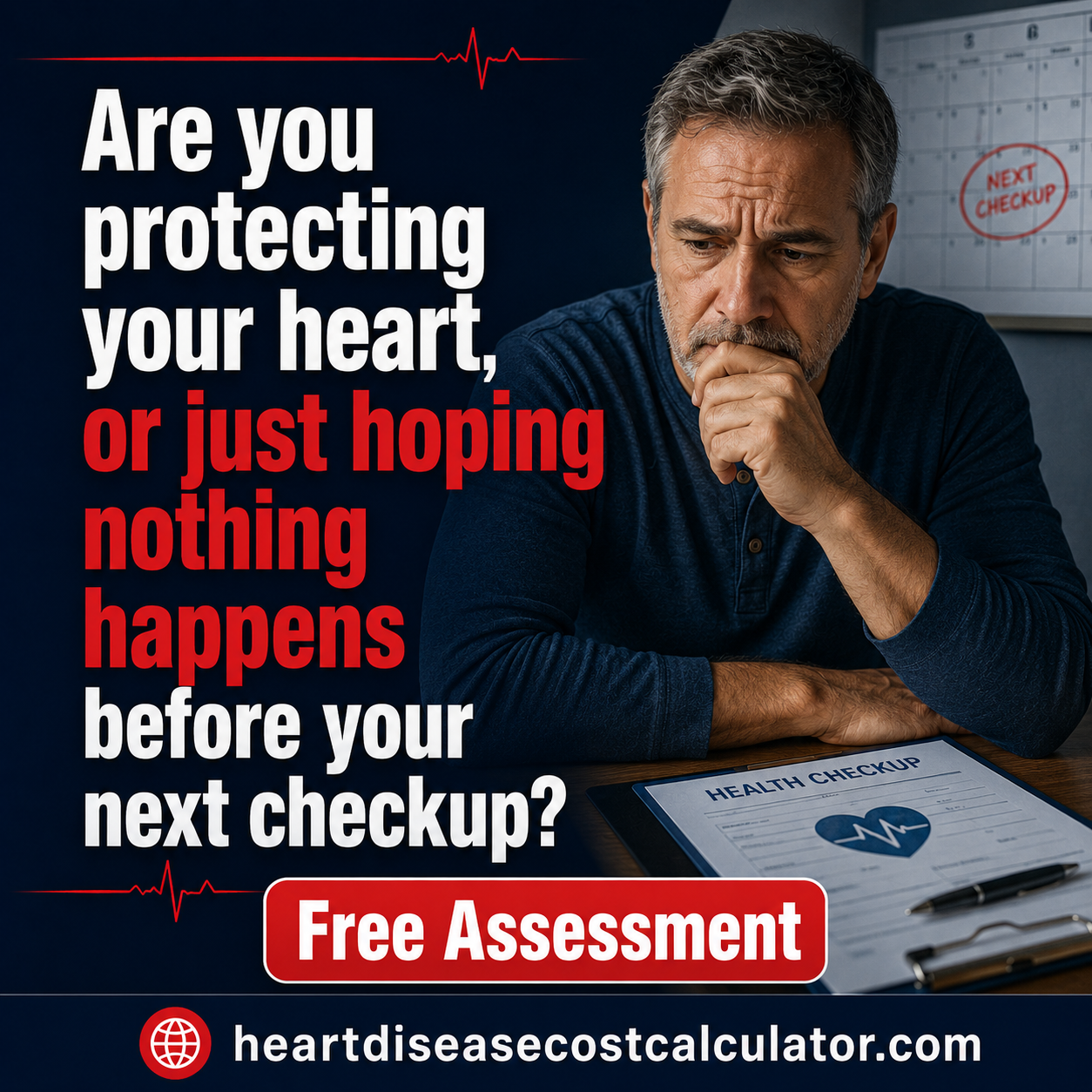
You know the feeling.
A twinge in your chest. A flutter. A moment of shortness of breath. And suddenly, your heart is racing—not from exertion, but from fear.
Is this it? Is this the big one? Should I call someone? Should I go to the hospital?
And then it passes. You take a breath. You tell yourself you're being dramatic. You move on with your day.
But the fear lingers. It's there in the back of your mind, waiting for the next twinge, the next flutter, the next moment of uncertainty.
Fear is not a heart-health plan.
You can't live like that. And you don't have to.
The most dangerous heart problems can feel like nothing. Plaque buildup and high blood pressure may progress quietly for years. But that doesn't mean you have to live in fear of the unknown. It means you need to take control of what you can control.
Build a proactive daily routine that supports circulation and cardiovascular wellness.
Support your heart health with regular physical activity. The American Heart Association recommends at least 150 minutes of moderate exercise per week. The CDC suggests choosing healthy food and drinks and maintaining a healthy weight.
Improve your circulation with daily movement, hydration, and stress management. Mayo Clinic advises managing stress in healthy ways, prioritizing quality sleep, and staying up to date with screening tests.
Boost your energy with better sleep and better nutrition. Small changes—like sleeping 11 minutes more and doing an extra 4.5 minutes of exercise daily—have been shown to make a meaningful difference.
And most importantly, know your numbers. Because uncertainty is what feeds fear. Knowledge is what kills it.
A study published in 2026 found that combining small, achievable changes was associated with a 57% lower risk of major cardiovascular events. Fifty-seven percent. From daily habits you can start implementing right now.
You don't have to live in fear. But you do have to take action.
Take the free assessment. Build your proactive daily routine. Replace fear with knowledge and action.
Fear is not a heart-health plan. Build one today.
About the Author
Dr. James Mitchell
MD, FACC
Medical Writer & Health Finance Specialist
Dr. James Mitchell specializes in making complex medical and financial information accessible to patients and families. With expertise in cardiovascular health and healthcare economics, Dr. James Mitchell helps readers understand the true costs of heart disease and make informed decisions about their care.